
Bebe Katsenes and Johnny Marx dish out underground comedy (literally)
Written by Izzy Sami | First Name Basis
Photographed by Kate Cunningham | @katewcunningham
LINDA: A Comedy Show | @lindacomedyshow
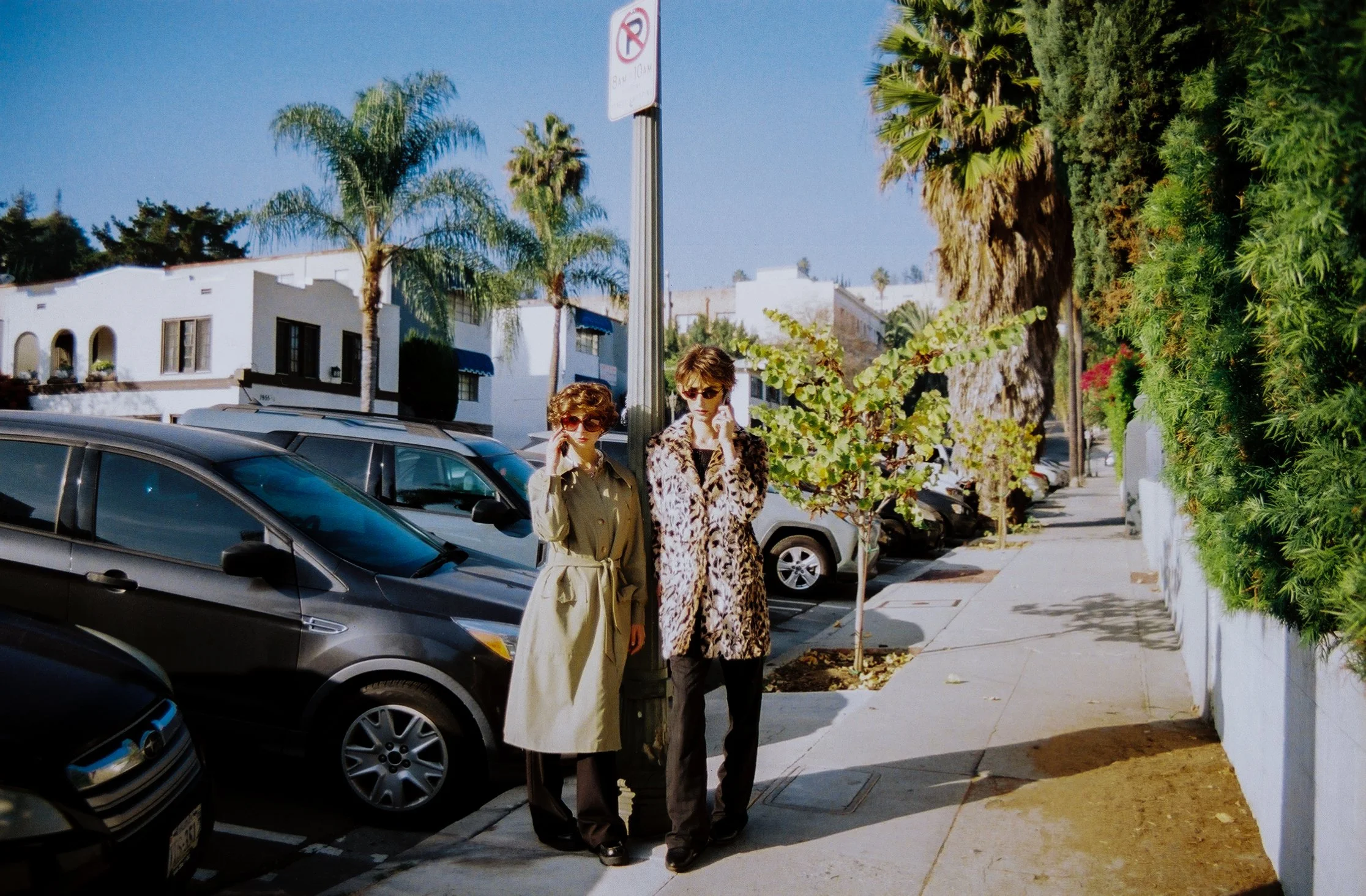
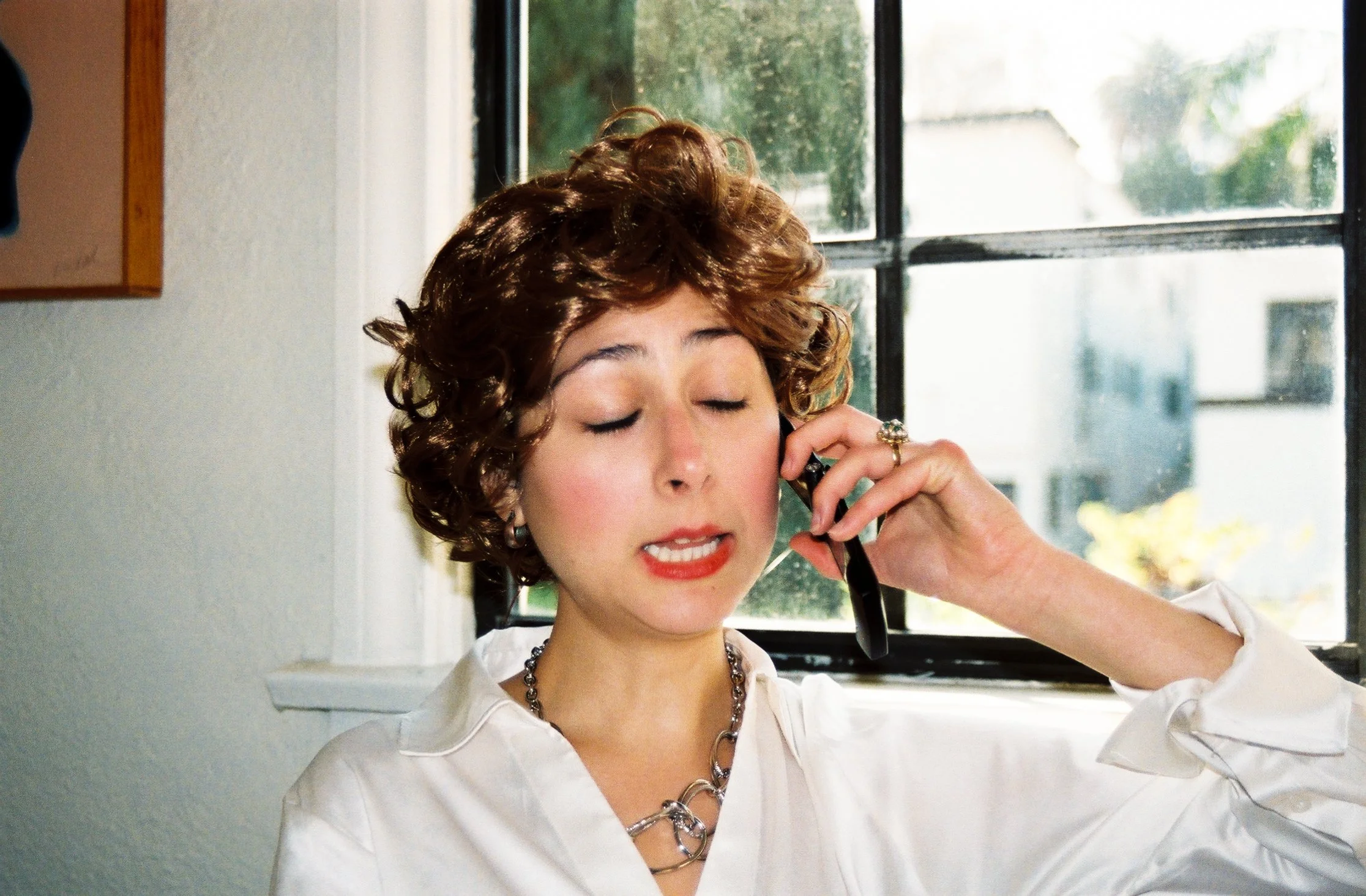
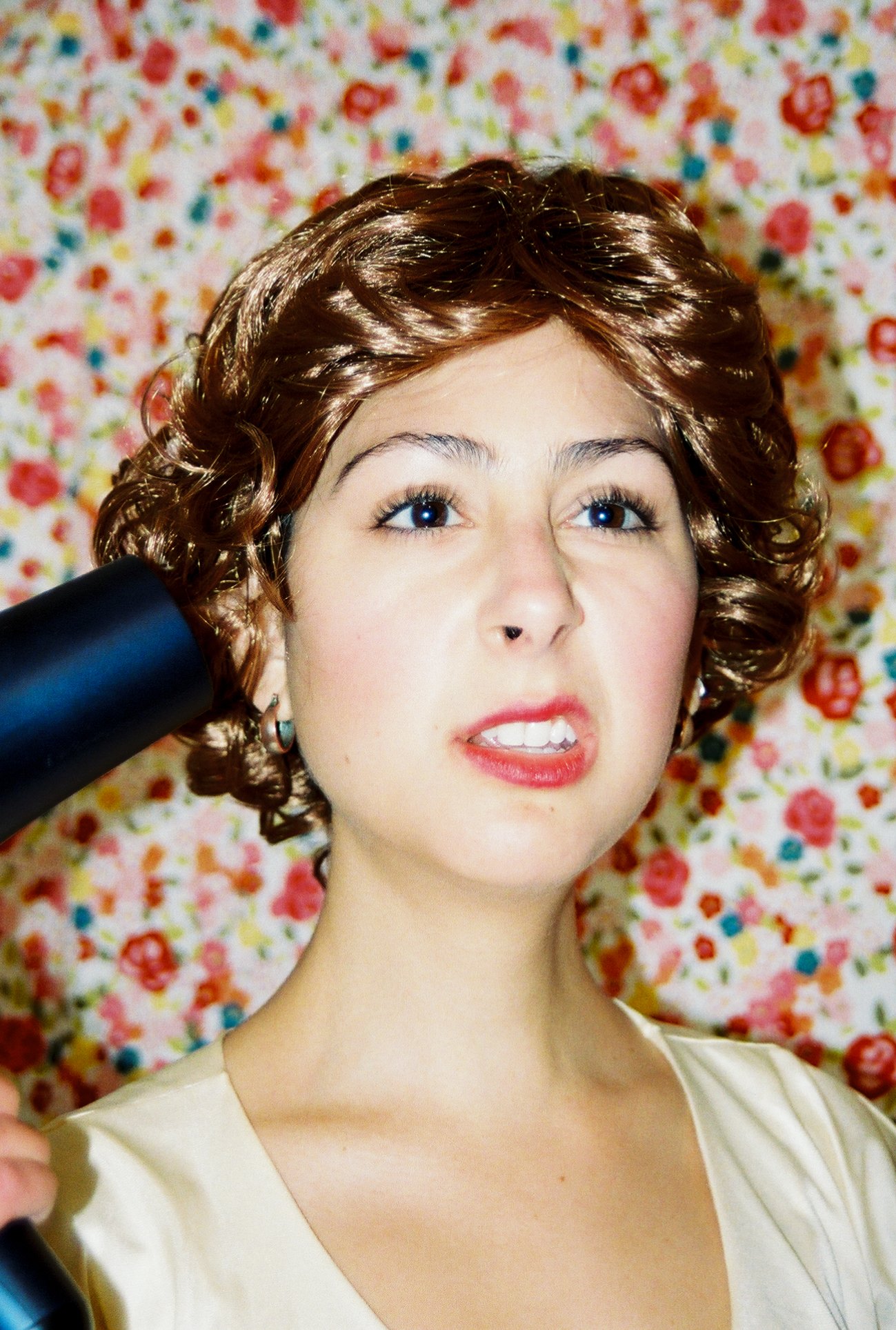
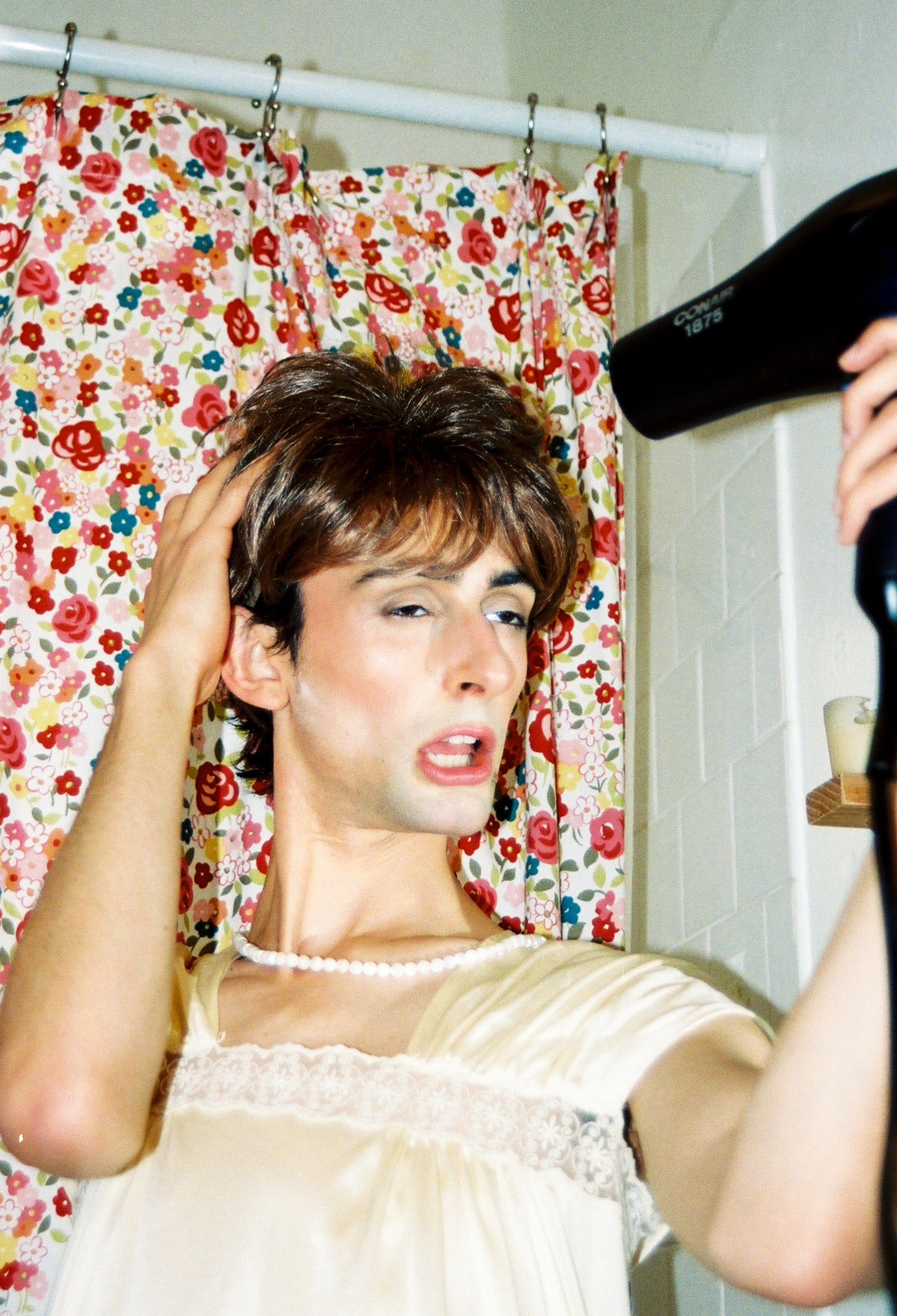
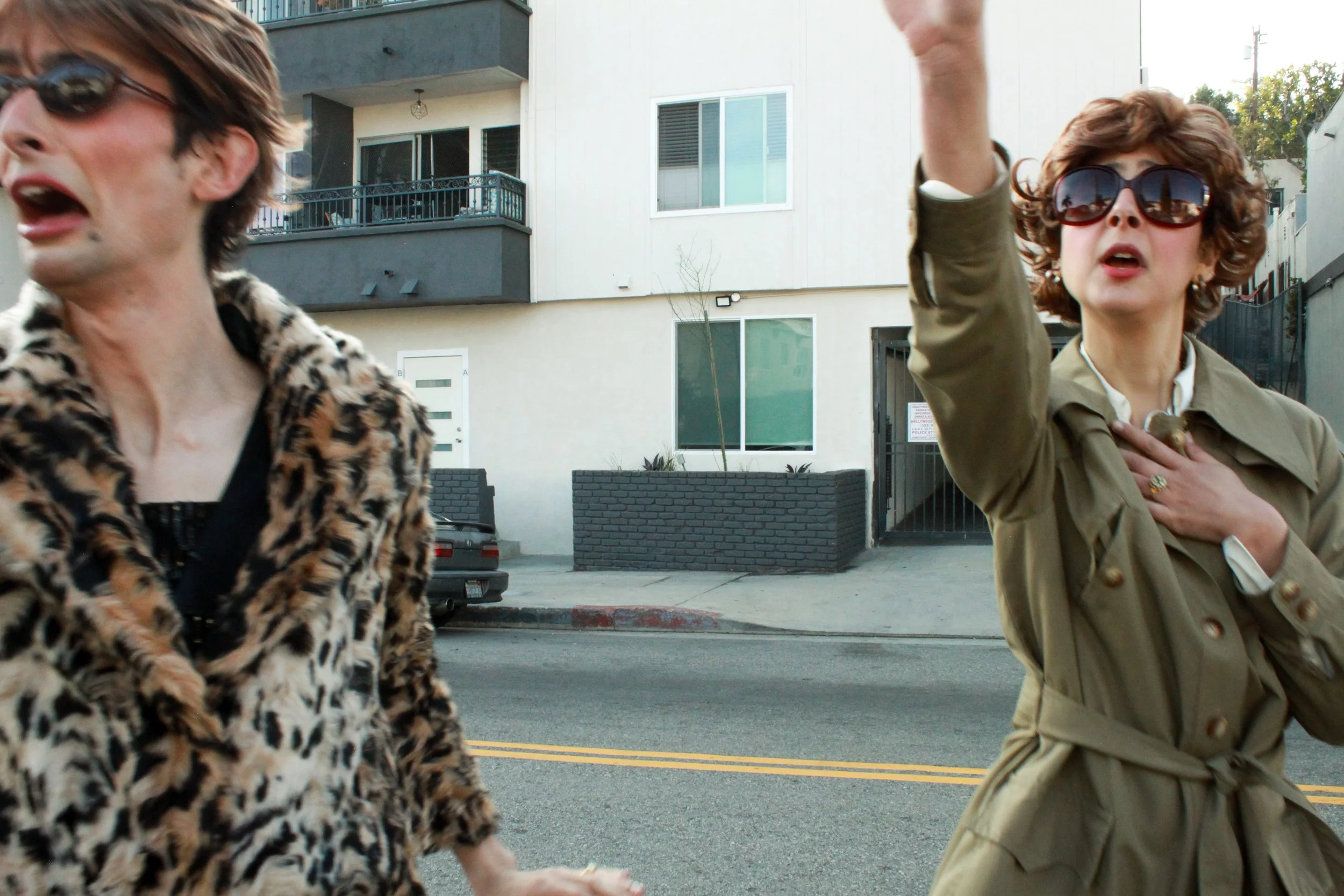
Beneath a wine shop in Atwater Village, two middle-aged ladies bounce onto a stage with big smiles and cropped shiny brown hair. They greet the audience under pink and purple pastel lighting before introducing themselves as Linda and Linda.
This is their show: Linda.
“We love to laugh, we love to host,” Linda B tells the audience.
“And our husbands are always saying, ‘Get out of the house, Linda!’” chimes Linda J.
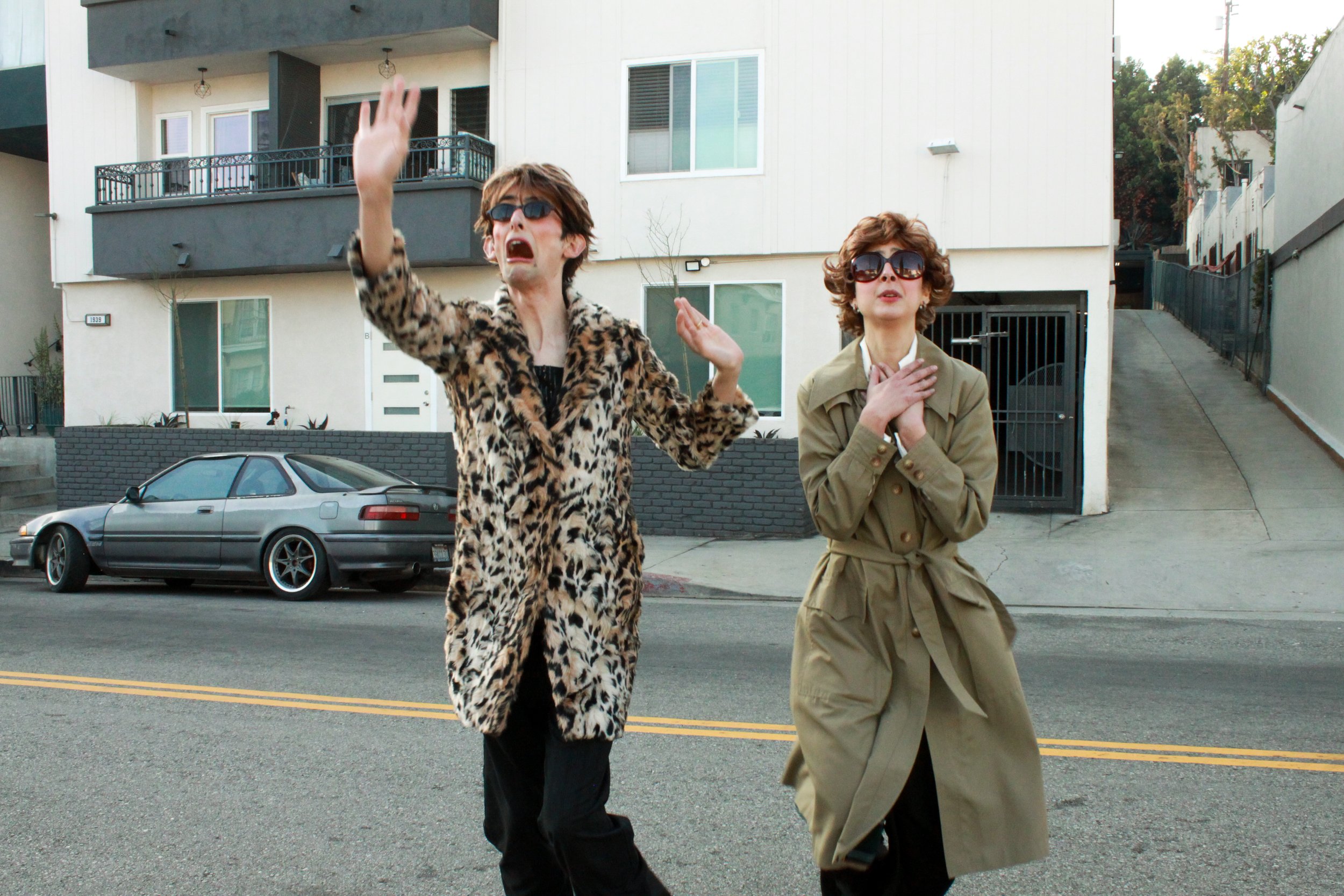
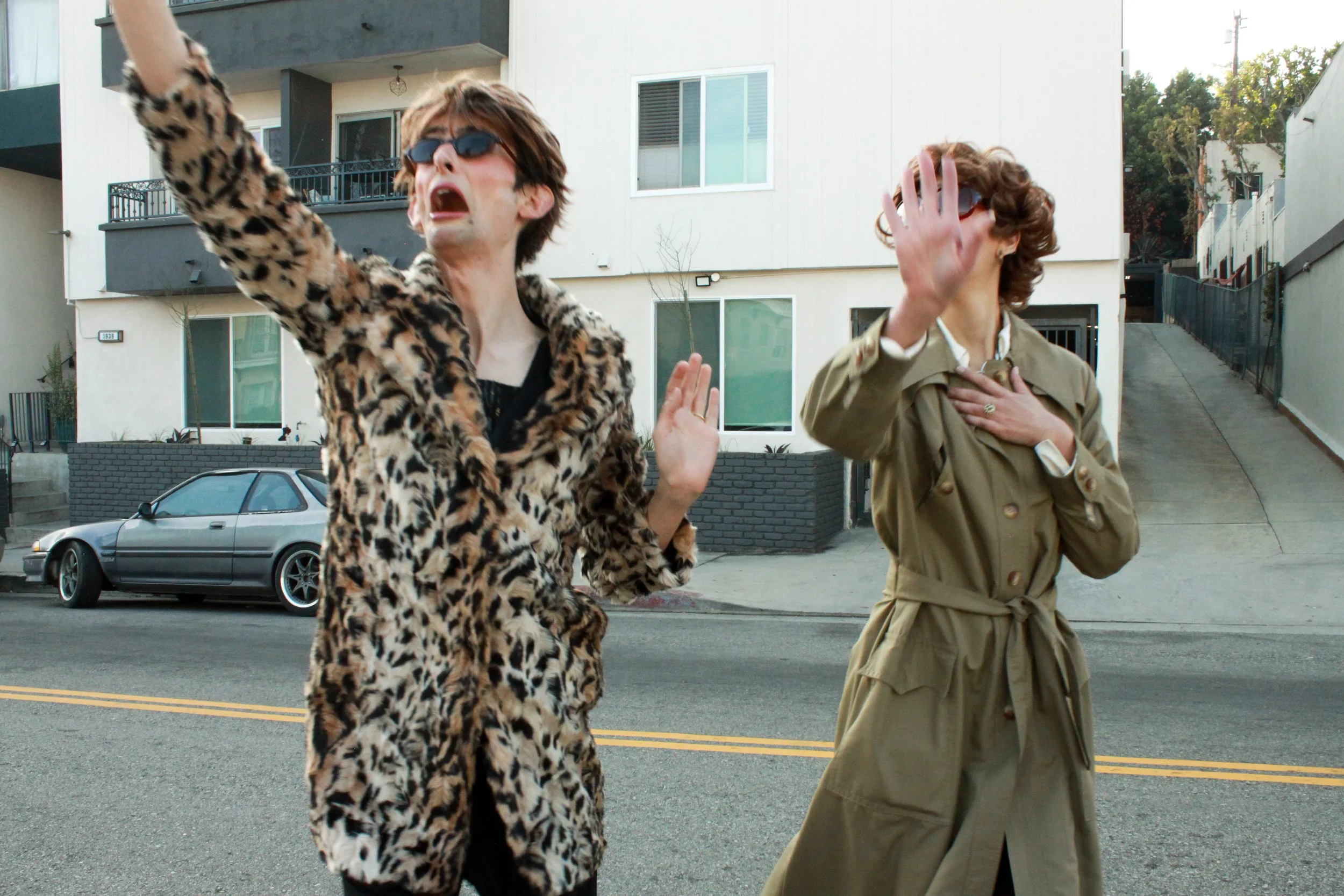
They describe themselves as best friends, co-heads of the PTA, Sherman Oaks neighborhood watch presidents, and a bottle of chardonnay’s worst enemy.
Most nights, the bar under Nico’s Bottle Shop vibrates with conversational fervor, dense with babble and heat, cast in a neon red light tinting everyone a glowy burgundy. Through a large rectangular window carved into one side of the bar, you can squint and see an audience in profile, eyes affixed to a dark stage. Once a month, that stage is set for Linda.
The monthly comedy show is hosted by duo Bebe Katsenes and Johnny Marx. The pair introduces each show with a sketch segment, dressed up as two moms sitting down to dish about everything from their kids and husbands to dry January. Think of Amy Poehler and Maya Rudolph’s “Sweater Weather” SNL bit mixed with John Mulaney and Nick Kroll’s “Oh, Hello”.
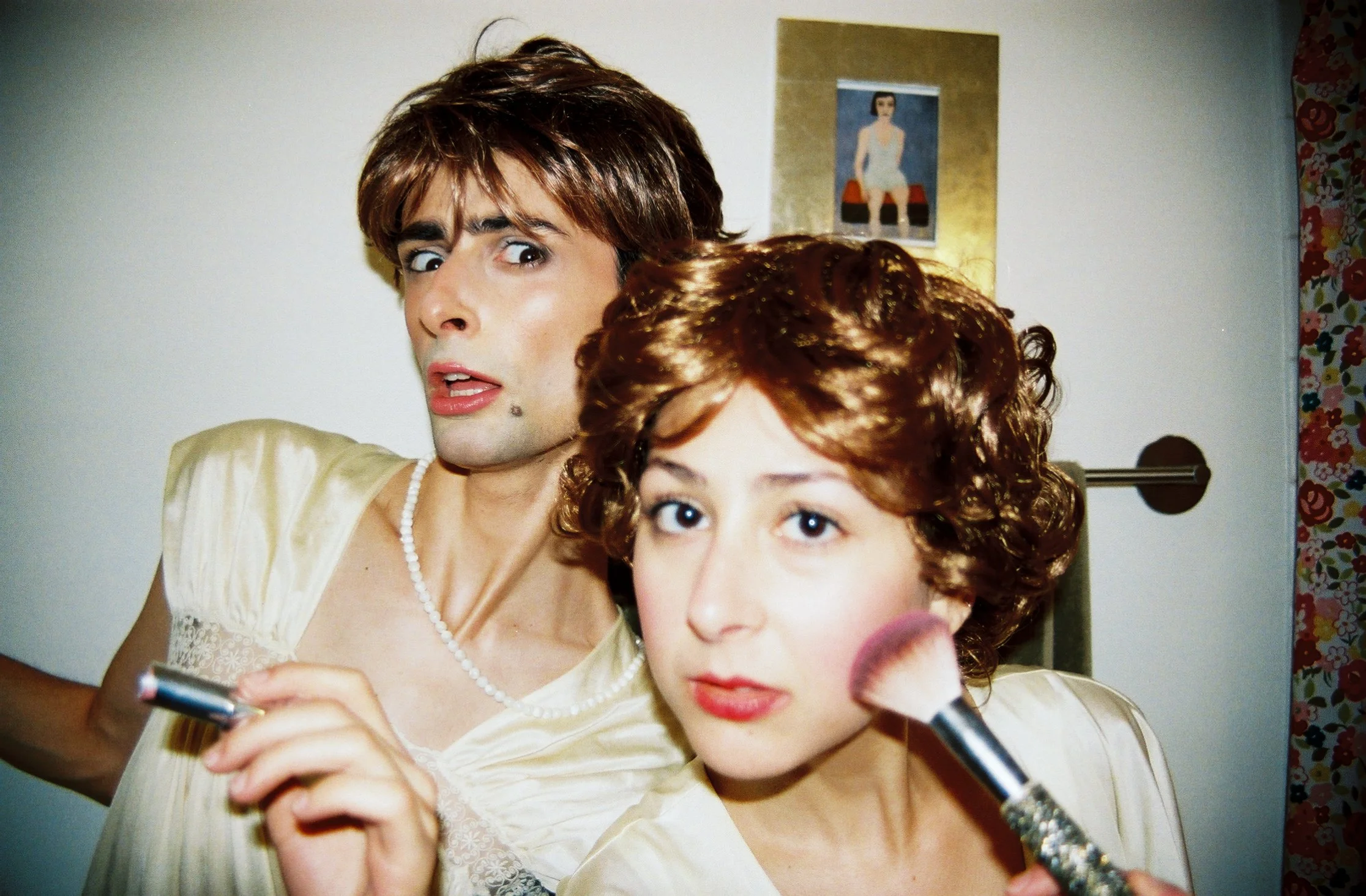
Then they introduce their first guest comic, dash off stage, rip their wigs off, and continue the show as Bebe and Johnny. Their energy ranges from ecstatic to exuberant, voices never straying from rapturous delight.
Starting each show in character distinguishes the night from the flurry of other monthly standup shows happening throughout Los Angeles’ boisterous scene.
“We’re not a sketch show or a typical standup show. We’re sort of a fusion of both,” Bebe says, her long dark hair free from its little Linda wig. “The hope is that people will return to see those two characters, but also if people are coming for the first time they can ask, ‘Oh, what’s this fun thing that’s happening up top?’”
They play wine moms on stage under a wine shop. What could be more fitting?
Even when they weigh the challenges of planning a show a month — DM’ing comics, plotting out a tight schedule, facilitating with agents — the overarching sentiment is clear: we can’t wait to do it again.
Bebe and Johnny (far too young to be middle-aged moms, by the way, yet embodying the role perfectly) met in college, two theater majors in a standup class. They were drawn to each other for their comedic charms, then stuck together because of a shared dedication to their newfound comedic ambitions. (Why do ambition and goofiness feel like opposing forces?)
After college, their initial plan was to host an open mic together and then eventually turn that into a recurring show. They knew they wanted to name it something “ironic and quick.”
“Our final two options were ‘Linda’ and ‘Jenna’s 16th Birthday Party,’” Johnny says.
When they got the slot at Nico’s, their penchant for self-promotion fell into aesthetics inspired by “that nostalgic wine mom everyone’s familiar with.” But they didn’t necessarily plan to play mom characters. Ahead of their first show, they toyed with the idea of setting the stage with a gimmick: what if two women, Linda and Linda, were the hosts?
I ask if they treat Linda like a full-time job.
“Girl —” Johnny says.
“Yeah,” Bebe says. “Especially the closer —”
“Especially the closer it gets,” Johnny emphasizes. “And you’d be surprised how quickly you have to turn around and think about the next show —” (“Yeah,” Bebe chirps) “— after you’ve done the last one.”
We’re tucked into a corner of Nico’s underground/basement bar, Baby Battista (though I’ve never actually heard anyone call it that). Johnny and Bebe arrive together, entering the red glow of the subterranean space. Bebe orders a mead; I sip a severely overpriced cocktail.
There are similarities between their Linda personas and their true selves — Johnny’s Linda is a New Yorker, Bebe’s is from Arizona — but their Linda personas aren’t total riffs on their actual personalities. Well, maybe Johnny’s is, unabashedly babbling, while Bebe’s softspoken homely Linda is more of an amalgamation of the women in her family.
“What we’re doing is not an average standup show,” Bebe says (“I agree,” says Johnny). “No shade to average standup shows. What we do is just a little different. And because we pride ourselves on making a really good show, it takes a little bit more work.”
The last time I was down here was for Linda. It was sold out, the room packed and dimly lit. Bebe and Johnny modestly share that they’ve sold out every show they’ve had at the venue since they started last April. Their next show on Feb. 23 will likely be no different, with a lineup including comics and internet personalities Dylan Adler, Ivy Wolk, and Shelby Wolstein.
The audience at a Linda show is a congregation of friends and fans. At one show, it seemed like Bebe’s entire extended family was in the crowd. At another, Johnny’s coworkers ventured from the Westside to see his set. The audience is always fresh, attracted to the lineup of buzzy comics curated by Bebe and Johnny.
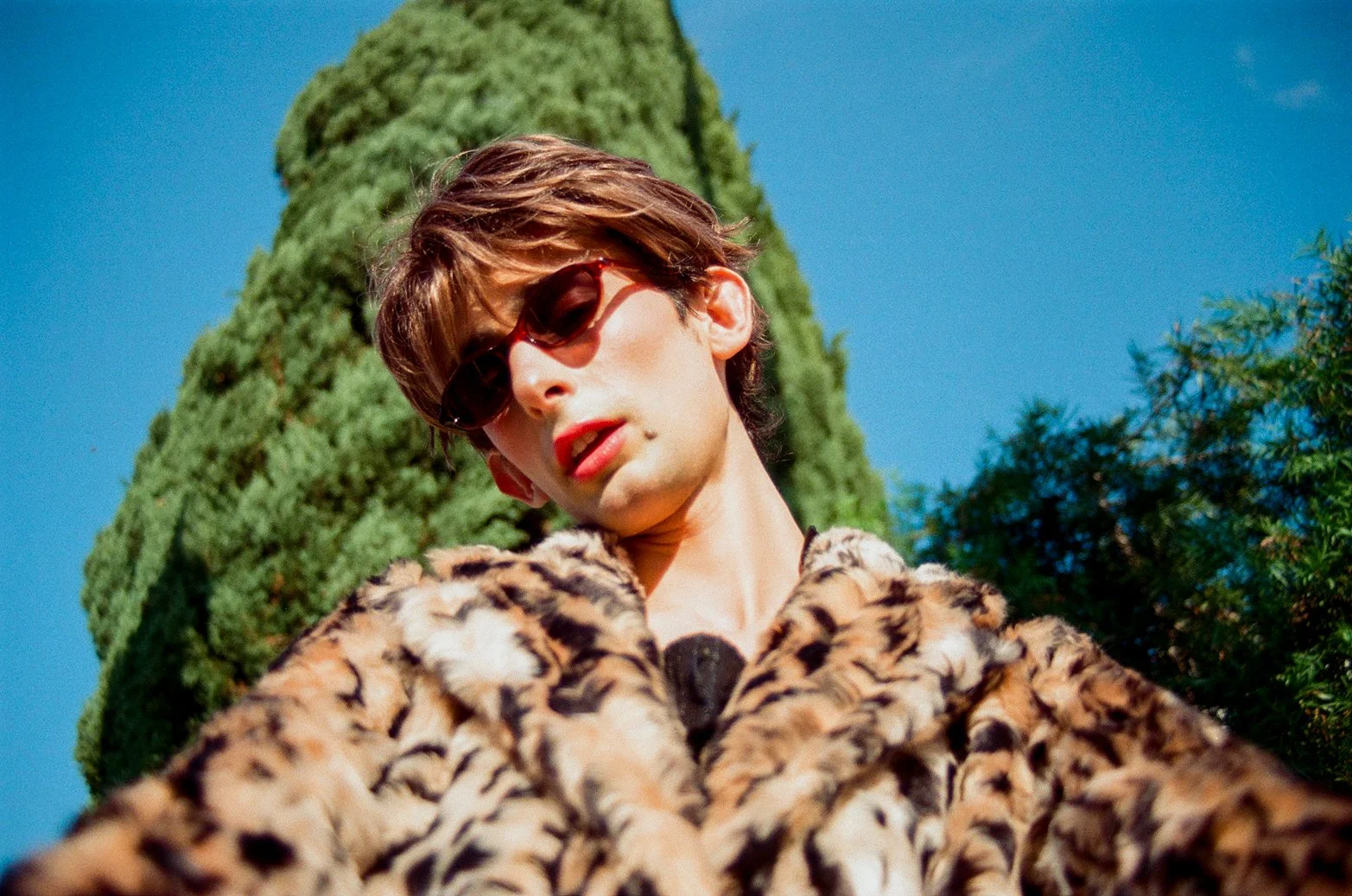
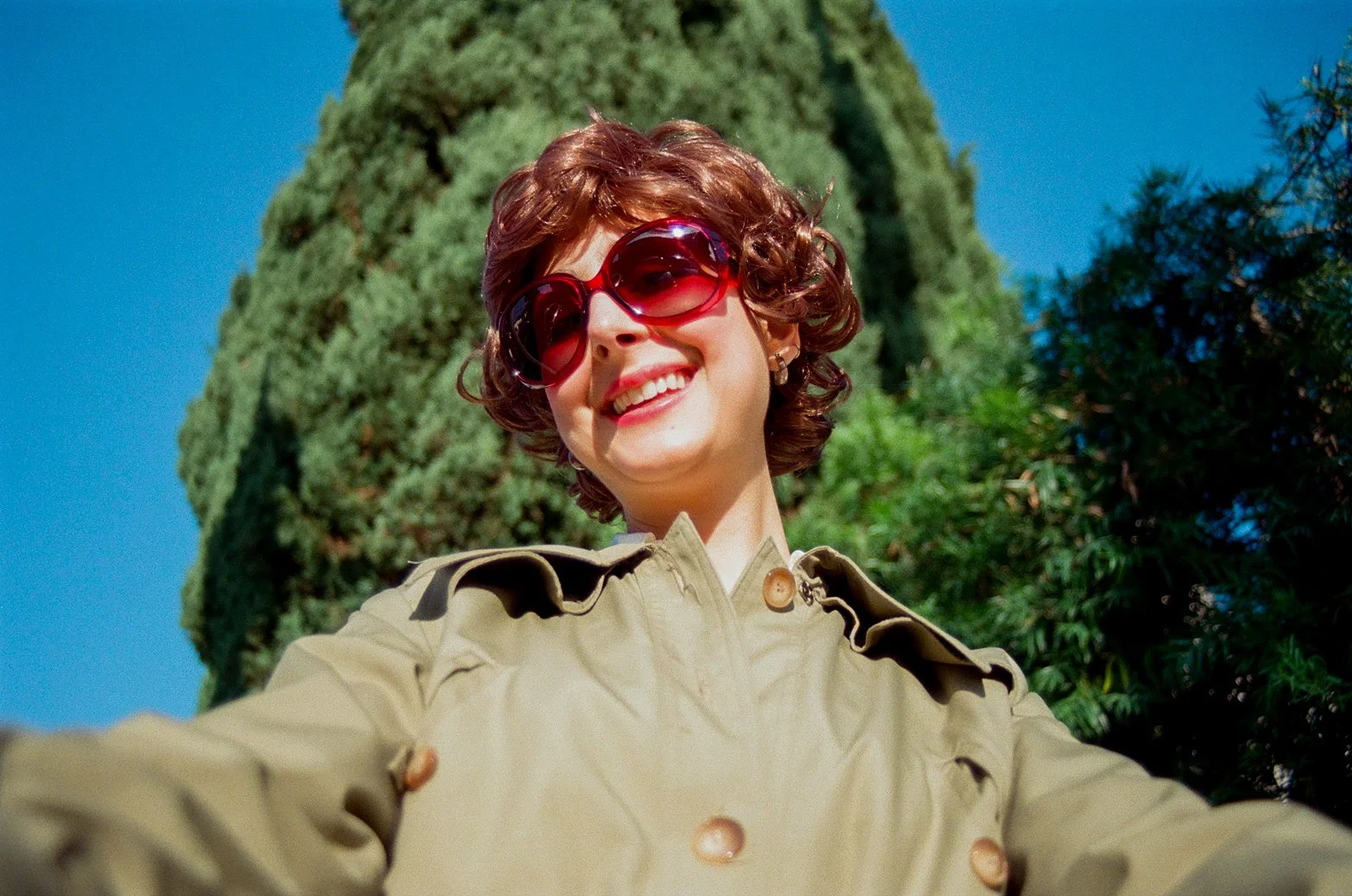
In November, Johnny had what he considers the best show he’s ever done. Not because he got the most laughs, but because in a tiny, packed room, he was entirely present on stage and playing off the audience.
“So many times, I’ve heard other people say, ‘if it’s funny to you, it will be funny to the audience.’ I have not found that to be the truth,” Johnny says. “To a certain extent, yes, you do have to trust your art, especially if you go to an open mic and no one’s laughing. But you also have to have a relationship with an audience, almost like you’re telling jokes in a big group of friends, because a joke could be told completely different with two different audiences. You need that presence and that aliveness to have a successful set.”
This comedy ethos comes up multiple times during our conversation at Nico’s, the idea to perform like you’re telling jokes to your friends.
To Bebe, this is the essential impression to capture in standup.
“You can create a sense that we’re all in a room laughing at this thing we’re familiar with, finding that collective, shared experience,” she says. “The journey of finding your voice in standup, which I feel like I’m continuing to try and find, is all about relationship with the audience and discovering what makes you funny. Maybe it’s not the writing, maybe it’s some little tick I have. But the more you do it, the more you understand what they’re laughing at. That’s the gift. Like, how do I bring out more of the parts that are authentically me?”
Their essence of comedy is deeply personal, pulling from anecdote and observation. I wouldn’t describe either Bebe or Johnny’s humor as dark or mean-spirited. More than anything they poke fun at themselves, or want to tell you a story from their childhood. It’s like listening to your friend paint a picture of something ridiculous they went through that week.
I lose track of the amount of times they say “one thouuuusand percent” or “totally totally,” affirmation baked into their vernacular.
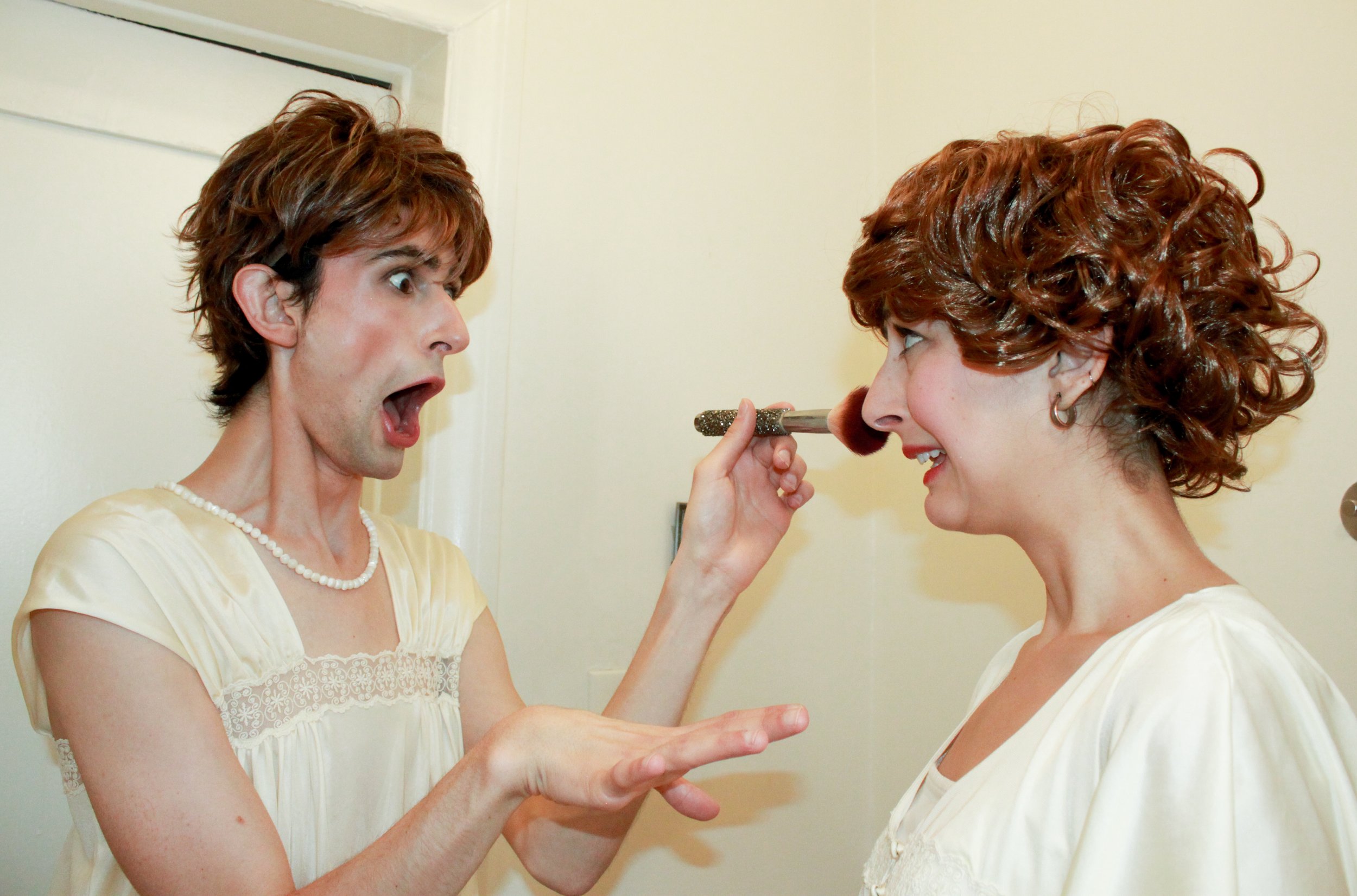
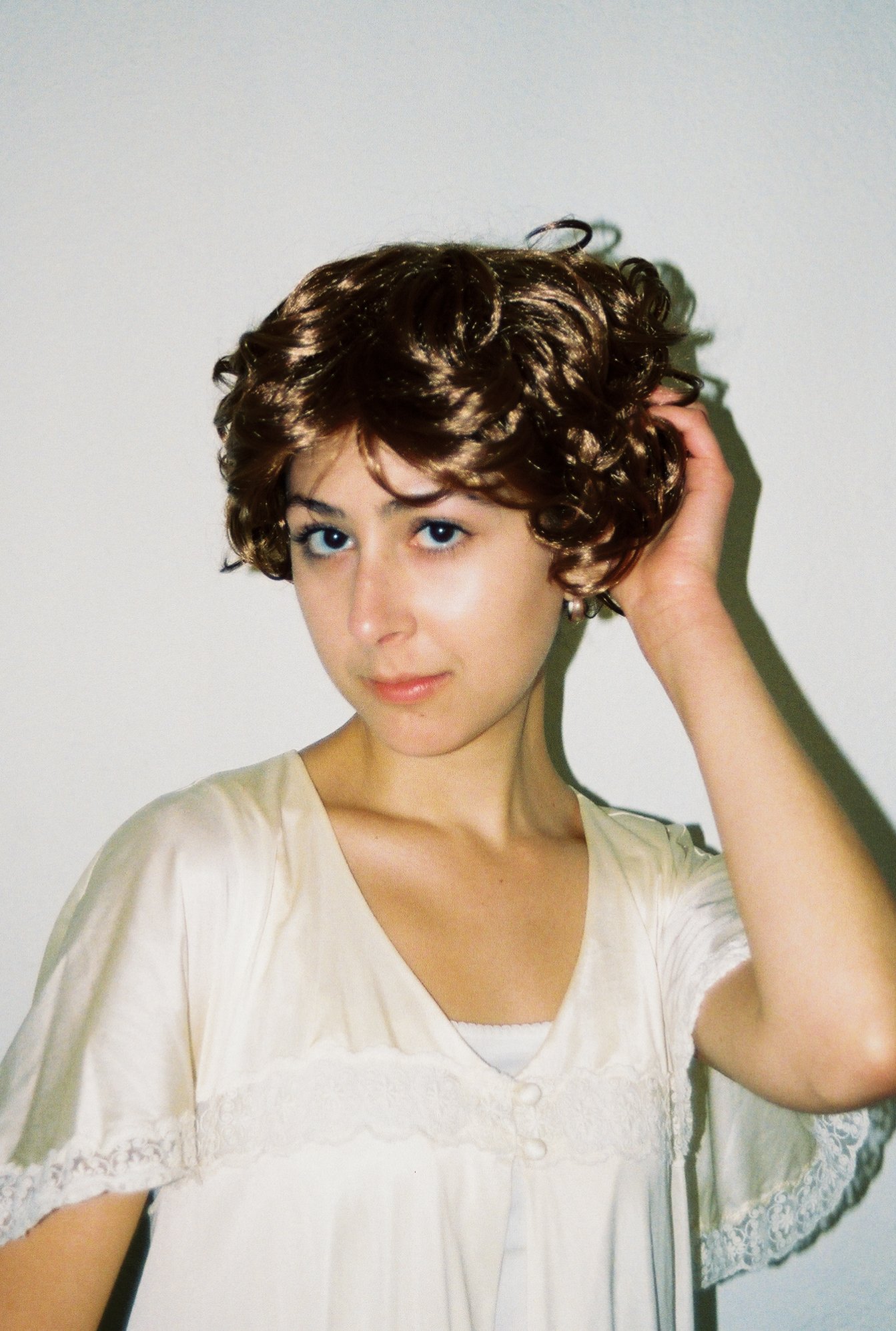
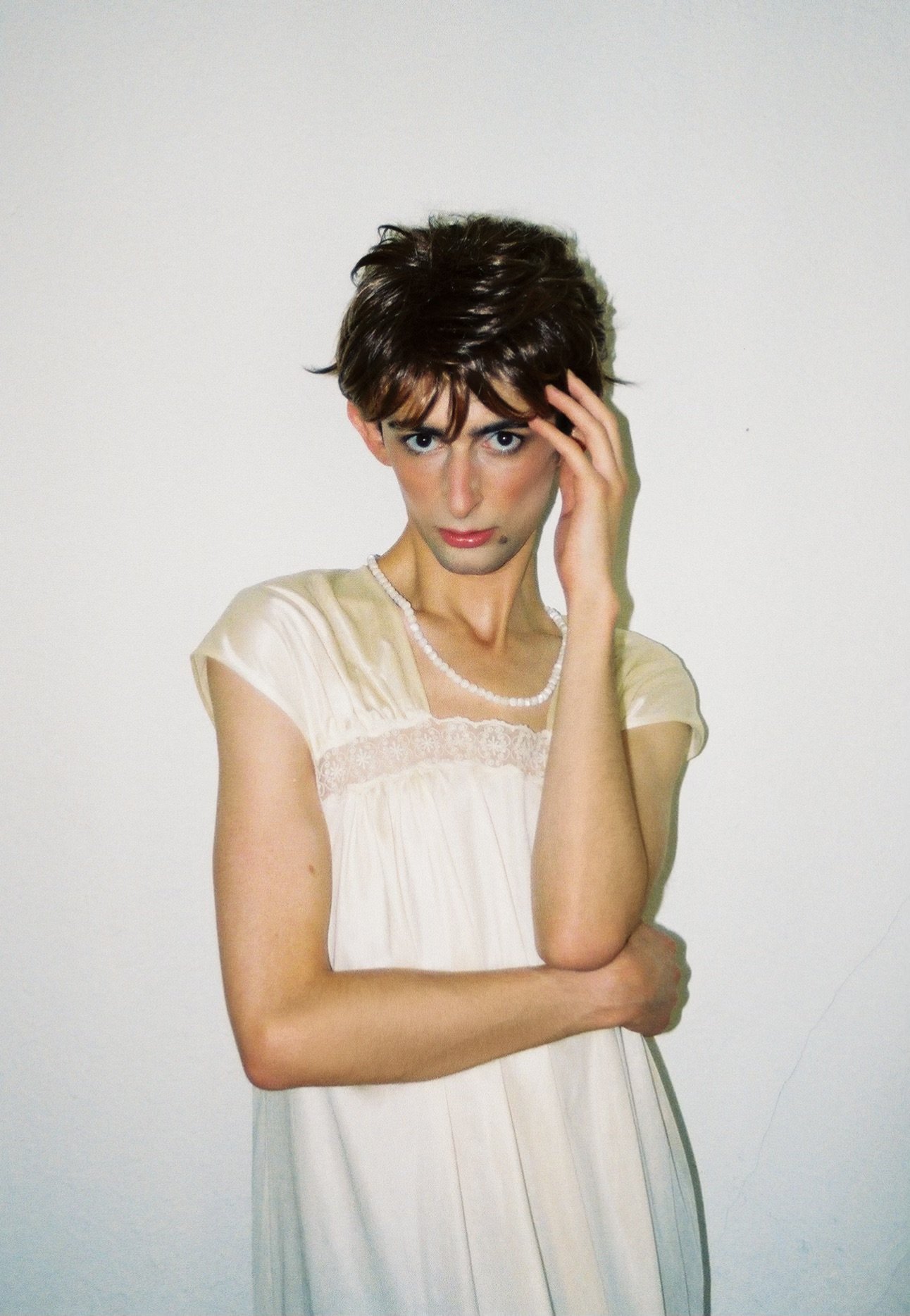
Without Bebe, Johnny says he would never have gone to an open mic after college. Bebe counters firmly that without Johnny, she wouldn’t have followed through on any of her visions of hosting a show. Comedy can be isolated, she says. Collaboration is both a constant trust fall and landing pad.
“Getting to collaborate is the reason to make or do anything,” Bebe says. “If I could always just make art with my friends and it would never get complicated, I would do that for the rest of my life.”
I ask if it ever gets complicated between them.
They consider this. Johnny answers first. “I think we’ve gotten really good at giving each other notes and being like, ‘Hey, girl. What about this?’” he says in a gentle, coaxing tone. “I mess up constantly, and Bebe is very good. She could just, if she wanted, she could just start hitting me. She’s very good at gently being like, ‘So, we talked about this now maybe three times.’”
Bebe rolls her eyes. “I also mess up constantly, oh my god. But I think we both have the sense that we want the thing to be great. So it’s like, how do we make the thing great?”
Initially, they began their collaboration by writing a never-aired web series together. Johnny was nervous Bebe wouldn’t like his contributions, facing the utmost human fear that comes from handing your honest bleeding heart to someone creatively.
“What I realized early on is that’s why you have a partner: so you can lean on someone,” he says. “I had to realize that it wasn’t about impressing someone. We already trust each other to make it good. That’s why we’re there. It’s about showing them what you think isn’t perfect, and then trusting that they’re gonna help you find the way.”
“One thousand percent,” Bebe nods. “There’s a baseline level of respect we have for each other. I think Johnny is a genius. I know that he’s capable — that we’re both capable of being incredible. Let’s just get each other there.”
With their theater backgrounds, Johnny says he and Bebe used to perform standup more like a memorized monologue.
“But now I think we’re both —”
“— fighting that urge every time,” Bebe says. “Part of the job of going on stage is you just have to go out there and be present and let the jokes be available to you. The journey is not to be too prepared, because you won’t have fun and you won’t be funny.”
At their first Linda show, they came on stage doing a choreographed dance to Groove is in the Heart that went on for more than three full minutes. For their Halloween show, the pair came on stage painted green. This joint willingness and commitment to the bit amplifies their performance. You can see them glowing with passion under the stage lights.
Even now, they’re practically aglow just talking about Linda.
Before the last Linda show, a friend told Bebe, “It’s so interesting to see the way that you evolved in stand up. You and Johnny — you really complement each other. I see the way that you’ve been influenced by him.”
Showing off a new comedic energy has been cathartic for Bebe.
“There’s something really exciting about getting to show a different side of yourself,” she says. “Being on stage and breathing with the audience just feels really special.”
Bebe says Johnny has inspired her to take more risks on stage, like the aforementioned choreographed dance. In return, Johnny says she’s just introduced him to more standup touchpoints and alternative mics.
“Every time I watch you, I’m like, ‘He’s so himself up there,’” Bebe tells Johnny. “You’re so free and loose and funny. I could watch you for hours.”
“I do a lot of self-deprecating material, which just comes very, very naturally to me,” Johnny says. “I deal with a lot of insecurity. My therapist said to me once, ‘Well, how nice that even though you struggle with a lot of these things, you’re able to turn it into something that can make an entire room of people laugh because they often feel that way too.’ There’s something about that that’s really empowering for me.”
Johnny once received a message from a guy saying his standup was incredibly healing for him. “I don’t know what he was being healed from, but that was really sweet,” he says.
At this point, after nearly a year hosting Linda, the pair has come to terms with what it means to bomb on stage. They’re Zen about it. They’re comfortable with scattered laughter after a joke, finding the best remedy is to acknowledge it and move on, to remain present and immersed in the joy ebbing through the audience.
“There’s no way you can fail if you listen to the truth of the room,” Bebe posits. “The audience wants to love you. Let them love you!”
They don’t have time for a pre-show ritual. The natural ritual that’s arisen within the frenzied air of Nico’s backstage is asking each other “is my wig on right?”
Around us, patrons are filling the air with chatter and weeknight post-work energy. People are seated at the bar and the couch, washed in neon red light. Bebe finishes her mead, I finish my drink (“The Newsboy,” I think it’s called). We’re talking about the room, the comfort and appeal of a “sexy little bar” like Nico’s. I note how insane it is they get to host the first recurring comedy show of their careers in a place like this.
“I love this space,” Bebe says, a wistful tinge slipping into her voice. “I feel like it’s one big magic trick that we get to stay here. Like, when will they realize we’re not supposed to be here?”
“For our audience, I don’t feel like I’m inviting people to some small — no shade — dumpy theater,” Johnny adds. “It was really hard when I was first doing shows and I would have to bring my friends out to this far-ass place that was — no shade — disgusting.”
There’s no lack of comedy mics in L.A., no lack of men on stage at a bar with a two-drink minimum, talking about Hinge fails and not seeking help for a flurry of mental health issues. The prevalence of queer mics is minuscule in comparison — they exist, of course, and seem to be growing, but they can be hidden under a cloak of discretion that makes them hard to find.
It’s part of the reason Linda was born: to center new voices while further diluting L.A.’s flattened comedy scene with something fresh and bubbly and bright.
The show next week is PTA-themed (Parent-Teacher Association, not Paul Thomas Anderson). It’ll be whimsical but sharp, like any good Linda show.
“We lead from fun,” Bebe says.
~
Izzy Sami is a journalist by trade, writer by compulsion. She writes profiles of young creatives on her Substack, First Name Basis, and lives in Los Angeles to hang out with her friends and read in public.